
404-547-5771
Concrete Contractor Pendergrass GA: Services, Pricing & What to Know (2026)
HomeBlogConcreteConcrete Contractor Pendergrass GA: Serv…
Concrete

Concrete Contractor Pendergrass GA: Services, Pricing & What to Know (2026)

7 min readUpdated

Pendergrass, GA homeowners trust Greenstone Landscaping for concrete driveways, stamped patios, retaining walls, drainage & sod. Here is the complete 2026 pricing and service guide for Jackson County.

Greenstone Landscaping LLC
Concrete & Landscape ContractorsNortheast Georgia

Pendergrass is one of Jackson County, Georgia fastest-growing communities — and with new construction, expanding neighborhoods, and established homes aging into driveway and patio replacement cycles, demand for quality concrete and hardscape work is stronger than ever. Whether you are building on a new lot off Hwy 335, renovating an established property near downtown, or fixing drainage issues on a sloped Jackson County lot, choosing the right concrete contractor makes the difference between a surface that lasts 30 years and one that cracks within three. This guide covers everything Pendergrass homeowners need to know in 2026: services, pricing, soil challenges, and how to hire a contractor who understands Jackson County.

Concrete & Hardscape Services in Pendergrass, GA

Greenstone Landscaping LLC provides a full range of concrete, hardscape, and outdoor services to Pendergrass and all of Jackson County. Every project includes proper site prep, base work, and finishing — not shortcuts that fail in Georgia clay.

Concrete Driveways

Standard broom-finish, exposed aggregate, and stamped concrete driveways built for Pendergrass clay soil. A properly installed driveway in Jackson County needs a 4–6 inch compacted gravel base and rebar reinforcement — anything less fails within 5–10 years as clay expands and contracts. We pour at 4,000 PSI minimum with control joints placed every 10 feet.

Concrete Patios

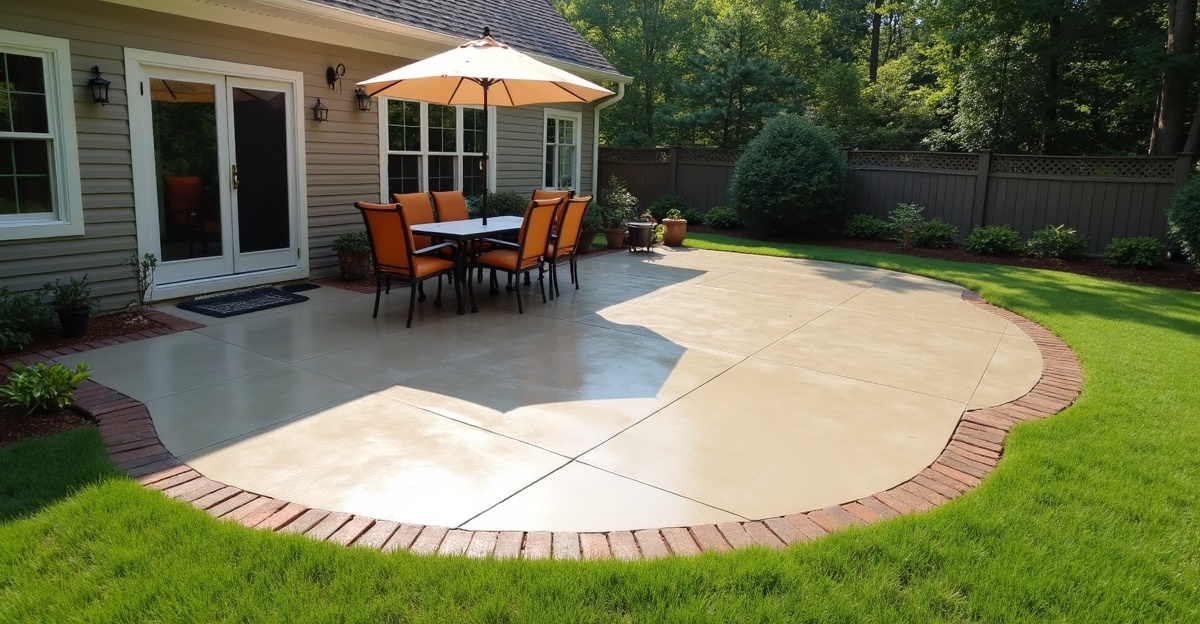
Poured, smooth, brushed, or stamped — we design and install patios that handle Georgia freeze-thaw cycles and summer heat. Pendergrass backyards range from flat new-construction lots to sloped established properties, and our patio designs account for grade, drainage, and how you actually use the space.

Stamped Concrete

Cobblestone, Ashlar Slate, wood plank, and custom patterns. Stamped concrete is the most popular decorative upgrade in Pendergrass because it delivers natural-stone aesthetics at roughly half the cost. We use integral color hardeners and UV-resistant sealers rated for Georgia sun exposure.

Retaining Walls

Jackson County terrain is hilly, and many Pendergrass properties need retaining walls for slope stability, erosion control, or to create usable flat yard space. We build in concrete segmental block, natural stone, and boulder materials — every wall includes drainage pipe and gravel backfill to handle clay soil hydrostatic pressure.

French Drain Systems & Drainage

Pendergrass clay-heavy soil is notorious for poor drainage. We install French drains, channel drains, surface grading, and catch basin systems designed specifically for Jackson County conditions. If your yard pools water for more than 24 hours after rain, a drainage solution is not optional — it is essential before any sod or hardscape work.

Sod Installation

Bermuda, Zoysia, and Tall Fescue sod for Pendergrass properties. We always grade and amend soil before laying sod — installing grass over Jackson County clay without prep is the most common reason lawns fail within one season. We include pH testing and lime amendment in every sod quote.

Land Grading

Site prep, yard leveling, and slope correction for Pendergrass lots before concrete, sod, or patio installation. Grading is often the most overlooked step — and the most important for long-term results on Jackson County clay.

2026 PricingFree On-Site Estimate

Every Pendergrass project starts with a free on-site estimate. We assess your soil, grade, and drainage before quoting — so the price you get is accurate and the work we do lasts. Call 404-547-5771 or fill out our contact form to schedule a same-week visit.

Concrete & Hardscape Pricing in Pendergrass, GA (2026)

Pendergrass and Jackson County pricing runs approximately 5–10% below North Fulton and Gwinnett County markets due to lower contractor operating costs and less restrictive HOA density. Here is what Pendergrass homeowners are paying in 2026:

  • Standard broom-finish concrete driveway: $5–$8 per sq ft installed
  • Exposed aggregate driveway: $7–$11 per sq ft installed
  • Stamped concrete driveway: $10–$16 per sq ft installed
  • Standard concrete patio (broom finish): $6–$9 per sq ft installed
  • Stamped concrete patio: $10–$16 per sq ft installed
  • Concrete paver patio: $14–$22 per sq ft installed
  • Retaining wall (concrete block): $20–$32 per sq ft of face area installed
  • Natural stone retaining wall: $30–$48 per sq ft of face area installed
  • French drain installation: $1,500–$5,500 per project depending on length
  • Sod installation (Bermuda): $1.00–$1.70 per sq ft installed
  • Sod installation (Zoysia): $1.50–$2.40 per sq ft installed
  • Land grading / regrading: $500–$2,500 per project

For a typical 600 sq ft two-car driveway in Pendergrass, budget $3,000–$4,800 for standard broom finish or $6,000–$9,600 for stamped decorative concrete. A 400 sq ft stamped patio runs $4,000–$6,400. These are all-in prices including excavation, base prep, reinforcement, pour, finish, and cleanup.

Jackson County Clay Soil: Why It Matters for Pendergrass Concrete

Jackson County sits on Georgia Piedmont red clay — some of the most expansive, moisture-sensitive soil in the state. When saturated, clay swells and pushes upward. When dry, it contracts and creates voids. This seasonal movement is the leading cause of concrete cracking, patio settling, and retaining wall failure in Pendergrass when base prep is inadequate.

A quality Pendergrass concrete contractor accounts for this in every project: minimum 4–6 inches of compacted crusher-run gravel base (not just sand or soil), rebar or wire mesh reinforcement throughout the slab, control joints placed to direct cracking where it will not be visible, and drainage integration to prevent water from pooling under or around the slab. Contractors who skip these steps deliver driveways and patios that look fine for a year or two — then crack, heave, or settle as the clay does what clay always does.

Red Flag: Any Pendergrass concrete quote for a 600 sq ft driveway under $2,800 is almost certainly skipping base depth, using wire mesh instead of rebar, or planning a substandard concrete mix. In Jackson County clay, these shortcuts create surfaces that fail within 3–5 years.

How to Choose a Concrete Contractor in Pendergrass, GA

Not every contractor who pours concrete understands Jackson County soil. Here is what to verify before hiring any concrete or hardscape contractor for your Pendergrass property:

  • Georgia contractor license — verify active status at the Secretary of State website; any residential project over $2,500 requires licensing
  • General liability insurance ($500K minimum) and workers compensation — ask for a certificate of insurance naming you as certificate holder
  • Local references within 30 miles of Pendergrass — drive by completed projects and inspect how they have held up
  • Detailed written estimate itemizing base depth, concrete PSI, reinforcement type, finish, and cleanup
  • Proof that drainage and grading are included or explicitly quoted if needed
  • Written workmanship warranty — minimum 1 year on concrete and hardscape projects

Pendergrass is approximately 25–30 minutes from our Loganville headquarters, which means faster estimates, quicker project starts, and no travel fees padding your quote. We know Jackson County soil, Jackson County weather, and Jackson County building expectations — because we work here every week.

Pendergrass-Specific Project Considerations

New Construction Lots

Many Pendergrass properties are new builds on recently cleared land. Builder grading is often rough, compacted by heavy equipment, and drains poorly. Before any concrete or sod work, we assess the builder grade and determine whether additional soil decompaction, topsoil amendment, or drainage correction is needed. Skipping this on a new lot guarantees problems within one season.

Established Properties & Driveway Replacement

Older Pendergrass homes often have original concrete driveways or asphalt now reaching end-of-life. Driveway replacement requires full demo and haul-away, then proper base reconstruction — not just pouring new concrete over the old slab. We handle complete removal, base prep, and new pour as a single project.

Sloped Lots & Retaining Walls

Jackson County terrain means many Pendergrass properties have meaningful slope. Retaining walls over 4 feet require building permits in most Georgia jurisdictions, and walls over 6 feet need engineered drawings. We handle permit applications and drainage design as part of every wall project — no surprises, no stop-work orders.

How Long Do Concrete Projects Take in Pendergrass?

  • Concrete driveway (standard, 600 sq ft): 2–3 days forming and pouring + 7 days before light vehicle use + 28 days for full cure
  • Stamped concrete driveway: add 1 day for pattern and color work
  • Concrete patio (400 sq ft): 1–2 days pour and finish + 7 days before furniture placement
  • Retaining wall (30 ft long, 3–4 ft tall): 3–5 days including excavation, base, drainage, and backfill
  • French drain system: 1–3 days depending on length and depth
  • Sod installation (3,000 sq ft with grading): 2–3 days total

We schedule Pendergrass estimates within 24–48 hours of your request and typically begin projects within 1–2 weeks of estimate approval. Weather delays are rare in spring and summer but can occur during Georgia winter cold snaps.

Free Concrete & Hardscape Estimates in Pendergrass, GA

Greenstone Landscaping LLC is a licensed and insured concrete and hardscape contractor serving Pendergrass, Jefferson, Commerce, Braselton, and all of Jackson County. We provide free on-site estimates with detailed written quotes including material specs, base depth, reinforcement details, and drainage assessment. No pressure, no obligation — just honest pricing from a local crew that knows Jackson County clay. Call 404-547-5771 or fill out our contact form and we will schedule a same-week visit to your Pendergrass property.

Frequently Asked Questions

Free Estimate

Ready to get started in Georgia?

We serve Loganville, Athens, Buford, Suwanee, Jefferson, and 15+ more Georgia communities.

Get a Free Quote 404-547-5771
Concrete Services

Driveways, stamped patios, repair & resurfacing — free on-site estimates across Georgia.

View Concrete Services
Free · No Obligation·Response within 24 hrs
Book a Free On-Site EstimateCall 404-547-5771
2026 Pricing Guide
Get an accurate quote for your project — free, no obligation

Driveway Replacement Project Example

Driveway Replacement Project Example

A cracked driveway usually stops being a cosmetic issue the day you start steering around low spots, pooling water, and edges that keep breaking away. That is where a driveway replacement project example becomes useful. Instead of guessing what the process looks like, it helps to see how a real project is planned, priced, installed, and finished from start to cure.

For most homeowners, the real question is not just whether the driveway looks bad. It is whether repair is still worth the money, or whether full replacement will give better long-term value. In many cases, once concrete has widespread cracking, settling, drainage problems, or surface failure, patching only buys a little time. A new driveway costs more up front, but it often solves the actual problem instead of covering it.

A realistic driveway replacement project example

Picture a homeowner with a 20-by-40-foot concrete driveway, or about 800 square feet. The existing slab is more than 20 years old. It has multiple cracks, one section near the garage has settled, and water runs back toward the house during heavy rain. The owner wants a cleaner look, better drainage, and a surface that will hold up for years without constant patching.

This is a common type of project because it combines structural and appearance concerns. The driveway is no longer doing its job well, and the old surface is pulling down curb appeal. The homeowner is not looking for a flashy redesign. They want a durable, good-looking replacement handled correctly the first time.

The starting condition

In this example, the first site visit confirms that replacement makes more sense than repair. The cracks are not isolated. The slab has movement in more than one area, and the slope is working against the property. If the contractor simply fills cracks or resurfaces sections, the same issues are likely to show up again.

This matters because the visible damage is often only part of the story. Base failure, poor drainage, and age tend to work together. A dependable contractor should point that out early, not after demolition starts.

The homeowner's goals

The homeowner has three priorities. First, they want dependable vehicle access without uneven slabs or weak edges. Second, they want the driveway to look sharper from the street. Third, they want the process to be straightforward, with clear timing and minimal disruption.

That last point matters more than people expect. A driveway replacement affects daily routines, parking, deliveries, and garage access. Good planning is not a small detail. It is part of the service.

How the project is planned

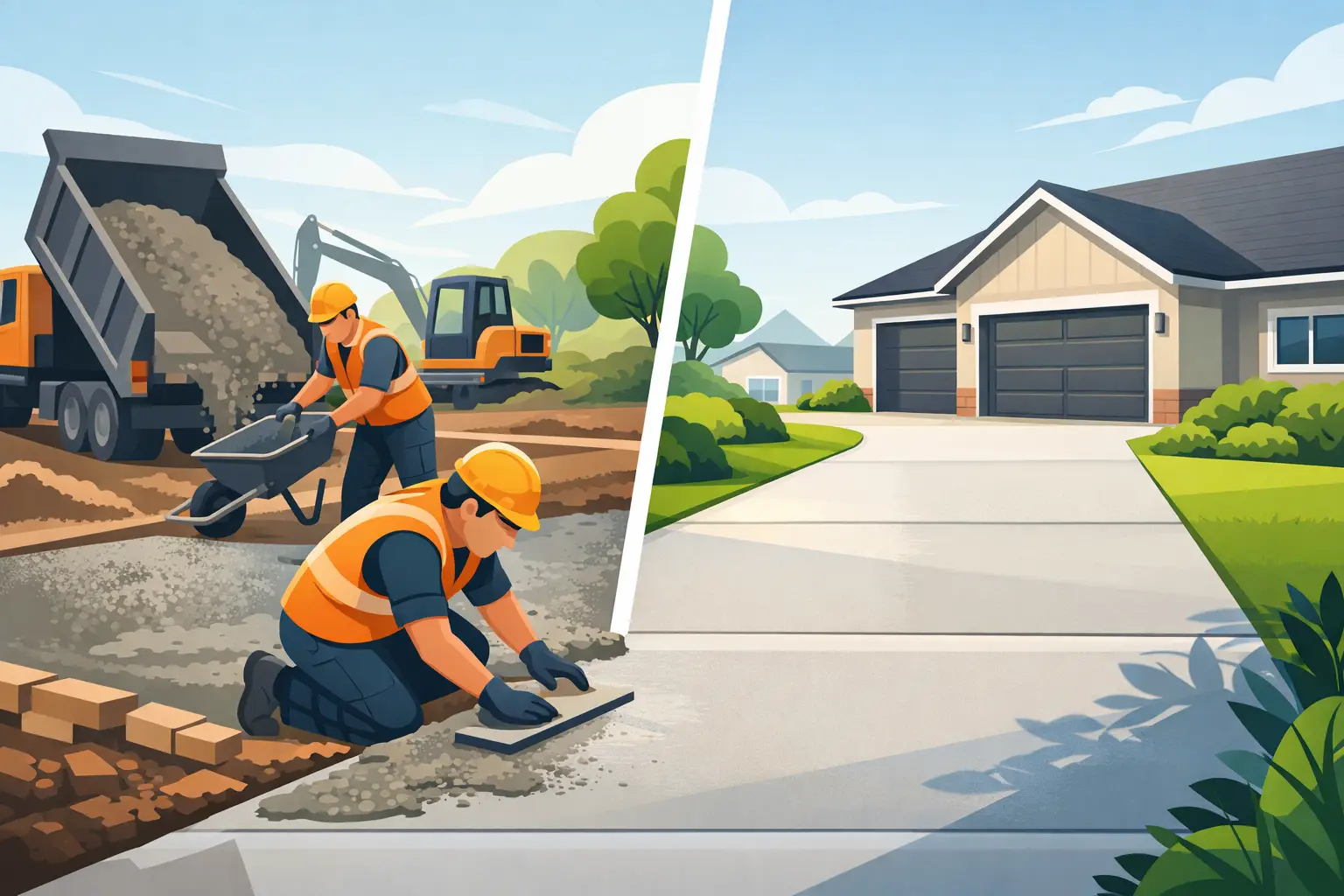
A solid replacement project starts with measurements, site grading review, and design decisions. In this example, the plan includes complete demolition of the old concrete, fresh base preparation, a new form layout, reinforced concrete installation, control joints, proper slope away from the home, and a broom finish for traction.

The homeowner also considers decorative upgrades. Stamped concrete or a bordered finish can improve the final look, but not every project needs that. If the main goal is reliability and clean curb appeal, a standard concrete driveway with quality finishing may be the right fit. If the property has a higher-end exterior, decorative concrete can tie the driveway into a patio, walkway, or front entry.

There is always a trade-off here. A basic finish is more budget-friendly and easier to keep understated. Decorative options create more visual impact, but they raise cost and may require more attention to color consistency and sealing.

Timeline expectations

For this example, the project is scheduled over several stages rather than treated like a one-day job. Day one covers demolition and haul-off. Day two is base prep, grading correction, and forming. Day three is the pour and finish, depending on weather and inspection requirements. After that comes curing time before vehicles can return.

On paper, that sounds simple. In practice, weather, subgrade conditions, and site access can shift the schedule. A contractor who sets realistic expectations is doing the homeowner a favor. Fast is helpful, but durable is better.

Cost range for this type of project

For an 800-square-foot concrete driveway replacement, pricing can vary based on thickness, access, demolition difficulty, reinforcement, local material rates, and finish selections. A straightforward project may land in a moderate range, while sloped sites, decorative work, or difficult removals can push it higher.

In this driveway replacement project example, a homeowner might expect costs to include demolition and disposal of the old slab, grading and base preparation, forming, reinforcement, concrete placement, finishing, and cleanup. If the driveway connects to a walkway, apron, or patio area, that can change the number as well.

The cheapest quote is not always the lowest overall cost. If base prep is rushed or drainage is ignored, the homeowner may pay again later in cracking, settling, or premature replacement. Good workmanship shows up under the concrete as much as on top of it.

What happens during installation

Once demolition begins, the existing driveway is broken up and removed. This is the point where hidden issues sometimes appear. Soft spots in the subgrade, poor compaction from the original build, or drainage paths under the slab can all affect the new installation. A quality crew adjusts the plan if needed instead of pouring over bad conditions.

After removal, the base is graded and compacted. This is one of the most important parts of the project because the slab performs only as well as what supports it. Then the forms are set to establish shape, thickness, and slope. Reinforcement is added based on the project design and local conditions.

Concrete placement comes next, followed by finishing and jointing. For a residential driveway, a broom finish is often the practical choice because it gives a clean appearance and better traction than a slick surface. Control joints help manage cracking by directing where concrete can naturally move.

Drainage and slope are not optional details

In this example, correcting the slope is one of the biggest improvements. The old driveway pushed water toward the garage. The new layout sends water away from the structure and improves runoff across the surface.

Homeowners sometimes focus on color and finish first, but drainage deserves equal attention. A driveway that looks great on day one and funnels water toward the house is still a problem. Functional design protects the investment.

Design choices that can improve the result

A replacement project is also a chance to improve how the driveway fits the property. Some owners keep the same footprint. Others widen the driveway slightly for easier parking, adjust the entrance flare, or coordinate the surface with a nearby patio or walkway.

If the home already has concrete features, matching the style can make the whole exterior feel more intentional. For example, a stamped border or decorative band may help connect the driveway to front steps or outdoor living areas. That said, simple often looks best on the right house. The goal is not to overbuild. It is to make the property look finished and function better.

For homes in places like Loganville, Winder, Athens, and Lawrenceville, where curb appeal and day-to-day usability both matter, that balance is usually what owners want most. They want the improvement to look strong, clean, and worth the investment without creating extra hassle.

What homeowners should watch for before hiring

If you are using a driveway replacement project example to judge your own job, pay close attention to how contractors talk about preparation. Anyone can discuss the final pour. The better question is how they handle demolition, grading, base compaction, thickness, drainage, and cure time.

You should also expect clear communication about access. When can you walk on the concrete? When can cars return? What happens if it rains during the scheduled pour window? A dependable company answers those questions early.

It also helps to ask whether the replacement is part of a broader exterior plan. Sometimes a new driveway pairs well with a concrete patio, front walk upgrade, or hardscape improvement. When one contractor can manage those elements together, the result usually feels more cohesive and the process is easier for the property owner.

The final result in this example

After curing, the homeowner has a new concrete driveway with corrected drainage, a smoother approach to the garage, cleaner lines, and a more finished appearance from the street. There are no patched sections, no loose edges, and no standing water after rain. The project cost more than surface repairs would have, but it delivered a true reset instead of another temporary fix.

That is why replacement often makes sense when the original slab has reached the point of widespread failure. You are not just paying for new concrete. You are paying for a better foundation, better water control, and a driveway that supports the look and use of the property for years.

If your current driveway is cracked, uneven, or draining poorly, the smartest next step is not to guess at the solution. It is to get a clear assessment from a contractor who can explain whether repair is still reasonable or whether replacement will give you the better result over time.