404-547-5771
Concrete Driveway Cost in Johns Creek, GA: 2026 Pricing Guide
HomeBlogConcreteConcrete Driveway Cost in Johns Creek, G…
Concrete

Concrete Driveway Cost in Johns Creek, GA: 2026 Pricing Guide

7 min readUpdated

Concrete driveways in Johns Creek, GA cost $5 to $20 per square foot installed in 2026. Johns Creek's HOA-dense subdivisions and premium North Fulton market mean curb appeal matters — here is the complete local pricing guide.

Greenstone Landscaping LLC
Concrete & Landscape ContractorsNortheast Georgia

Johns Creek is one of the most competitive real estate markets in Georgia — and your driveway is the first thing every buyer, guest, and HOA inspector sees. Whether you are in St. Ives Country Club, Medlock Bridge, Abbotts Bridge, Rivermont, or any of Johns Creek's dozens of established subdivisions, this guide gives you the complete 2026 pricing picture for a concrete driveway in Johns Creek, GA so you can budget accurately and hold any contractor accountable.

Concrete Driveway Cost in Johns Creek, GA (2026)

  • Standard broom finish: $5 to $8 per sq ft installed
  • Exposed aggregate finish: $7 to $11 per sq ft installed
  • Stamped concrete driveway: $11 to $16 per sq ft installed
  • Premium stamped + integral color + UV sealer: $14 to $20 per sq ft installed
  • Colored concrete with decorative border: $8 to $13 per sq ft installed
  • Demolition of existing driveway (add to above): $2 to $4 per sq ft
  • Rebar reinforcement upgrade: $0.50 to $1.00 per sq ft

Johns Creek and North Fulton County rates run 8 to 12% higher than rural Georgia markets. For a typical two-car driveway of 600 sq ft, budget $3,000 to $4,800 for a quality broom finish or $6,600 to $12,000 for stamped concrete — all-in including demolition, base prep, reinforcement, pour, and finish.

2026 PricingFree On-Site Estimate

Planning a driveway project in Johns Creek? We provide free on-site estimates with detailed written quotes including base specs, reinforcement details, and pattern samples for stamped projects. Same-week appointments across all of North Fulton County.

Most Popular Driveway Finishes in Johns Creek

Stamped Concrete — The HOA Subdivision Standard

Stamped concrete dominates the Johns Creek driveway market. In HOA communities like St. Ives, Medlock Bridge, and Abbotts Bridge, the driveway is a primary component of your home's exterior presentation — and stamped concrete delivers the visual quality that matches North Fulton home values. The most popular Johns Creek patterns are cobblestone, ashlar slate in large-format layouts, and European fan patterns. Charcoal with a sandstone base color is the most frequently requested combination, complementing the brick and stone home exteriors common throughout North Fulton.

Exposed Aggregate — Premium Low-Maintenance

Exposed aggregate has a strong following in Johns Creek among homeowners who want a premium, stone-like appearance without the resealing schedule of stamped concrete. White quartz and gray granite stone mixes are popular in the North Fulton market. Exposed aggregate requires resealing every 3 to 4 years rather than 2 to 3 for stamped — a meaningful maintenance advantage on wider or longer Johns Creek driveways.

Colored Concrete with Decorative Border — Mid-Range Impact

An increasingly popular mid-range option in Johns Creek's newer developments: integral color throughout the slab with a stamped border pattern framing the edges. Gives a custom, finished look at $8 to $13 per sq ft — significantly more distinctive than plain broom finish without the full-surface stamping cost.

HOA Considerations for Driveway Projects in Johns Creek

This is where Johns Creek driveway projects differ most from other Georgia markets. Most Johns Creek subdivisions have strict HOA covenants governing:

  • Approved driveway materials — some HOAs restrict colors, patterns, or finishes
  • Driveway width and setback requirements — widening a driveway may require HOA approval
  • Contractor licensing and insurance requirements — many Johns Creek HOAs require proof before work can begin
  • Timeline requirements — some HOAs require project completion within 30 to 60 days of ground disturbance
  • Appearance standards — cracked or deteriorated driveways can generate HOA violation notices

Johns Creek HOA Tip: Always submit your driveway project to your HOA architecture review committee before signing a contractor contract. Most committees meet monthly — factor this into your project timeline. Greenstone asks about your specific HOA requirements during every estimate visit and provides the documentation most Johns Creek HOAs need for approval.

Typical Driveway Project Costs in Johns Creek

  • Single-car driveway (300 to 400 sq ft, broom finish): $1,500 to $3,200
  • Two-car driveway (500 to 700 sq ft, broom finish): $2,500 to $5,600
  • Two-car driveway (500 to 700 sq ft, exposed aggregate): $3,500 to $7,700
  • Two-car driveway (500 to 700 sq ft, stamped): $5,500 to $11,200
  • Two-car + front walkway + apron (800 to 1,000 sq ft, stamped): $8,800 to $20,000
  • Full replacement including demolition (600 sq ft, stamped): $7,800 to $14,400 all-in
  • Long estate driveway (1,200 to 1,800 sq ft, stamped): $13,200 to $36,000

What a Quality Johns Creek Driveway Installation Includes

  • Full site excavation to minimum 8 inches below finished driveway elevation
  • 4 to 6 inch compacted crusher run gravel base — minimum 5 inch recommended for North Fulton clay
  • #4 rebar on 18-inch grid throughout — not wire mesh alone
  • Expansion joints at all garage door interfaces and every 10 feet of run
  • 4,000 PSI concrete mix minimum — 4,500 PSI for driveways subject to heavy vehicle loads
  • Full pattern and color sample review and approval before pour on stamped projects
  • UV-resistant sealer application within 28 days of cure
  • Written workmanship warranty on all completed work

What Drives Driveway Cost Up in Johns Creek?

North Fulton Clay Soil

Johns Creek sits on the Georgia Piedmont's red clay belt — highly expansive soil that swells in wet weather and contracts in dry spells. This soil movement is the primary cause of premature driveway cracking in Johns Creek when base preparation is inadequate. A minimum 5-inch compacted gravel base and rebar reinforcement throughout are non-negotiable for driveways expected to last 25+ years in this market.

HOA Compliance Documentation

Johns Creek HOA projects require more pre-construction coordination than standard Georgia driveway jobs. This includes architecture review submissions, contractor licensing verification, insurance certificates, and sometimes post-completion inspections. Reputable contractors build this administrative time into their quotes.

Topography and Driveway Length

Johns Creek's rolling terrain creates significant grade changes across the city — particularly in the St. Ives and Abbotts Bridge corridors. Sloped driveways require additional grading, and longer driveways in established neighborhoods add both material and labor cost. Equipment access on narrow private drives can also increase labor time.

Permit Requirements

The City of Johns Creek requires land disturbance permits for new driveway installations and significant replacements. Permit processing typically takes 5 to 10 business days. Your contractor should handle permit applications as part of the project — if they say no permit is needed for a new driveway, verify this directly with the City of Johns Creek Community Development Department.

Concrete Driveway vs. Asphalt in Johns Creek — Quick Comparison

Johns Creek HOAs typically prefer or require concrete over asphalt for aesthetic consistency. But even setting HOA requirements aside, concrete makes more sense in the Johns Creek market:

  • Concrete: $5 to $20 per sq ft installed, lasts 25 to 35 years, no summer softening, aesthetically premium
  • Asphalt: $3 to $5 per sq ft installed, lasts 15 to 20 years, softens in Georgia summer heat, requires sealing every 3 to 5 years
  • HOA factor: Most Johns Creek subdivisions explicitly prefer or require concrete
  • Resale value: Concrete driveways are a positive feature in North Fulton appraisals; asphalt is neutral at best

How Long Do Concrete Driveways Last in Johns Creek?

A properly installed concrete driveway in Johns Creek should last 25 to 35 years. The critical durability factors on North Fulton's clay-heavy soil are: a 4 to 6 inch compacted gravel base, #4 rebar reinforcement throughout, control joints placed every 10 feet, and regular sealing every 2 to 3 years for stamped or colored concrete. Driveways that fail prematurely in Johns Creek almost always trace back to inadequate base depth or wire mesh used instead of rebar.

Johns Creek Neighborhoods Served

Greenstone Landscaping LLC installs concrete driveways throughout Johns Creek and all of North Fulton County — St. Ives Country Club, Medlock Bridge, Rivermont, Abbotts Bridge, Shakerag, Technology Park area, Quail Hollow, Nesbit Ferry corridor, and all surrounding communities. We also serve adjacent Alpharetta, Roswell, Cumming, and upper Gwinnett County. Free, same-week on-site estimates. Call 404-547-5771 or fill out our contact form.

Frequently Asked Questions

Free Estimate

Ready to get started in Georgia?

We serve Loganville, Athens, Buford, Suwanee, Jefferson, and 15+ more Georgia communities.

Get a Free Quote 404-547-5771
Concrete Services

Driveways, stamped patios, repair & resurfacing — free on-site estimates across Georgia.

View Concrete Services
Free · No Obligation·Response within 24 hrs
Book a Free On-Site EstimateCall 404-547-5771
2026 Pricing Guide
Get an accurate quote for your project — free, no obligation

9 Best Stamped Concrete Patio Patterns

9 Best Stamped Concrete Patio Patterns

A patio can look finished or forgotten based on one choice: the pattern underfoot. When homeowners ask about the best stamped concrete patio patterns, they are usually trying to solve two things at once - they want a surface that looks better than plain concrete, and they want something that still makes sense for the way they actually use the space.

That is where stamped concrete stands out. It gives you the look of stone, brick, tile, or wood at a lower cost than many individual materials, while keeping the strength and clean installation process of concrete. But not every pattern works for every home. The right pick depends on your house style, patio size, traffic level, and how much visual movement you want in the space.

How to choose the best stamped concrete patio patterns

The best pattern is not always the most detailed one. In many yards, a simpler pattern gives a cleaner, more timeless result. A large patio with an outdoor kitchen, fire pit, or seating walls can handle more texture and variation. A smaller patio often benefits from a pattern that keeps the area from feeling busy.

Color matters just as much as texture. A pattern that looks great in a showroom sample may read very differently once it is poured across a full patio in direct sun. Lighter tones can keep a space feeling open and cooler in appearance. Darker tones add contrast and can help tie the patio to brick, stone, or darker trim on the home.

It also helps to think about the architecture of the house. A traditional brick home often pairs well with old-world stone or brick stamp patterns. A newer home with cleaner lines may look better with slate, ashlar, or plank-style textures. Good patio design is not about picking the fanciest option. It is about making the new surface look like it belongs.

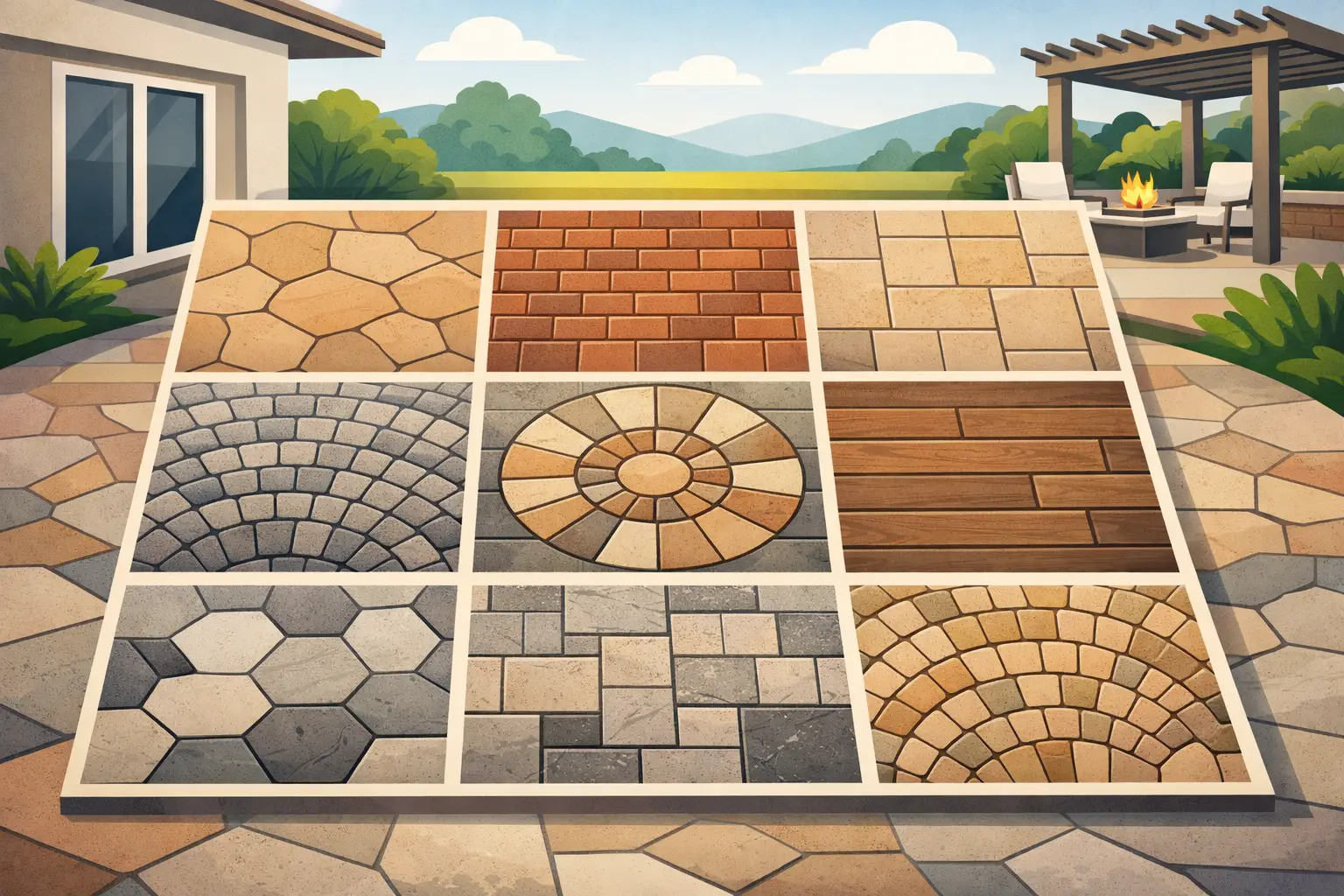
1. Ashlar slate

If you want one of the safest and most popular stamped concrete options, ashlar slate usually deserves the first look. It uses rectangular stone shapes in a repeating layout that feels structured without looking stiff. That balance makes it one of the best stamped concrete patio patterns for a wide range of homes.

Ashlar slate works well on medium to large patios because the pattern has enough movement to create interest, but not so much that it takes over the yard. It can lean formal or relaxed depending on the color blend. For homeowners who want a patio that feels upgraded without chasing trends, this is often the pattern to beat.

2. Random stone

Random stone patterns create a more natural, less uniform look. They imitate irregular flagstone and can help a patio blend into planting beds, curved walkways, and softer landscape design. If the goal is to make the hardscape feel less manufactured, this is a strong option.

The trade-off is that random stone can appear visually heavier than more organized patterns. On a small patio, that extra texture may feel crowded. On a larger backyard patio, though, it can add the kind of character that plain broom-finished concrete never will.

3. Brick pattern

Brick stamp patterns are a dependable choice for traditional homes, especially when the patio needs to connect visually with existing brick on the house or nearby hardscape. Running bond and herringbone styles are especially common because they look familiar and stay easy on the eye.

Brick patterns tend to feel neat and classic rather than dramatic. That can be a benefit. If you are designing for resale value or want a patio that will still look appropriate years from now, brick-inspired stamping is often a practical direction. Just keep in mind that realistic coloring matters here. If the color is off, the pattern can look less convincing.

4. Cobblestone

Cobblestone gives a patio a more old-world feel. It is textured, decorative, and often works best in spaces where the patio is meant to be a focal point rather than just a place to set furniture. Entry courtyards, accent borders, and smaller entertainment areas can all benefit from this style.

For a large patio, cobblestone across the entire surface can sometimes feel too busy. Many property owners get a better result by using it as a border or accent section paired with a calmer main field pattern. That mix adds personality without making the whole slab feel overly detailed.

5. Wood plank

Wood plank stamped concrete is a smart option for people who like the warm look of wood but do not want the upkeep of a traditional deck. It can complement farmhouse, craftsman, and modern-rustic homes especially well.

This pattern looks best when the coloring and plank widths are chosen carefully. Too much contrast or overly dramatic grain can make it look artificial. Done well, wood plank concrete gives you a durable patio surface with the visual softness of wood, which is a useful combination in backyards that need both style and low maintenance.

6. Seamless slate

Seamless slate has a more subtle texture than many heavily jointed patterns. Instead of obvious grout lines or distinct stone shapes, it gives the patio a softer, more continuous finish. That makes it a good fit for contemporary homes or for clients who want texture without a strong patterned grid.

This option is also practical when the patio already has a lot happening around it, such as furniture groupings, retaining walls, or strong landscape features. In those cases, a quieter surface can help the whole space feel more pulled together.

7. European fan

European fan is one of the more decorative stamped concrete patterns, often used to mimic old brick courtyards. It has a curved, radiating layout that immediately draws attention. For the right property, it creates a distinctive custom look.

It is not the most flexible choice, though. This pattern works best when it suits the style of the home and the patio shape. On a sleek modern house, it may feel out of place. On a traditional or more classic property, it can add charm that feels intentional rather than forced.

8. Travertine texture

Travertine-style stamped concrete has become a popular choice for homeowners who want a cleaner, upscale appearance. It tends to offer a more refined look than rougher stone textures, and it fits well with pools, outdoor dining areas, and newer home designs.

One reason this pattern ranks among the best stamped concrete patio patterns is versatility. It can work in light neutral colors for a bright, airy finish, or in warmer earth tones for a more grounded appearance. It also tends to photograph well, which matters more than people think when curb appeal and resale are part of the equation.

9. Custom border combinations

Sometimes the best result is not a single pattern at all. A main field in ashlar slate or seamless texture paired with a contrasting border can make the patio look more finished and more custom. Borders can define dining areas, frame steps, or help tie the patio to a walkway or driveway.

This approach works especially well when the goal is to elevate the design without overcomplicating the entire slab. It gives the patio detail where it counts while keeping the central area more relaxed and usable.

Which stamped concrete patio pattern is right for your property?

The answer usually comes down to how the patio will be used and what the home already gives you to work with. If you want broad appeal and a dependable look, ashlar slate, travertine texture, and brick patterns are hard to go wrong with. If you want something more natural, random stone may fit the landscape better. If you want the patio to feel more custom, borders or wood plank finishes may be worth the extra design attention.

It is also worth thinking beyond appearance. Deep texture can affect how furniture sits. Strong color variation can show dirt differently than a more blended finish. Large, open patios often need saw cuts or layout planning that work with the stamp pattern instead of against it. These details may sound small, but they shape whether the patio looks polished when the project is complete.

For homeowners and property managers in areas like Loganville, Winder, and Athens, stamped concrete also needs to perform well through changing weather, regular use, and seasonal exposure. That is why pattern selection should never be separated from installation quality. Even the best-looking stamp choice depends on proper prep, consistent finishing, and a clean layout.

At Greenstone Landscaping Co, the best patio projects usually start with a simple conversation about the property, the home style, and how the space needs to function day to day. A good stamped concrete patio should do more than imitate another material. It should give you a surface that fits your home, holds up to use, and makes the whole outdoor space feel more complete.

If you are narrowing down options, start by ruling out patterns that fight the style of your house. The right one will usually feel obvious once you see it in the context of the full yard, not just as a small sample. That is when a patio stops being just another project and starts feeling like part of the property.