
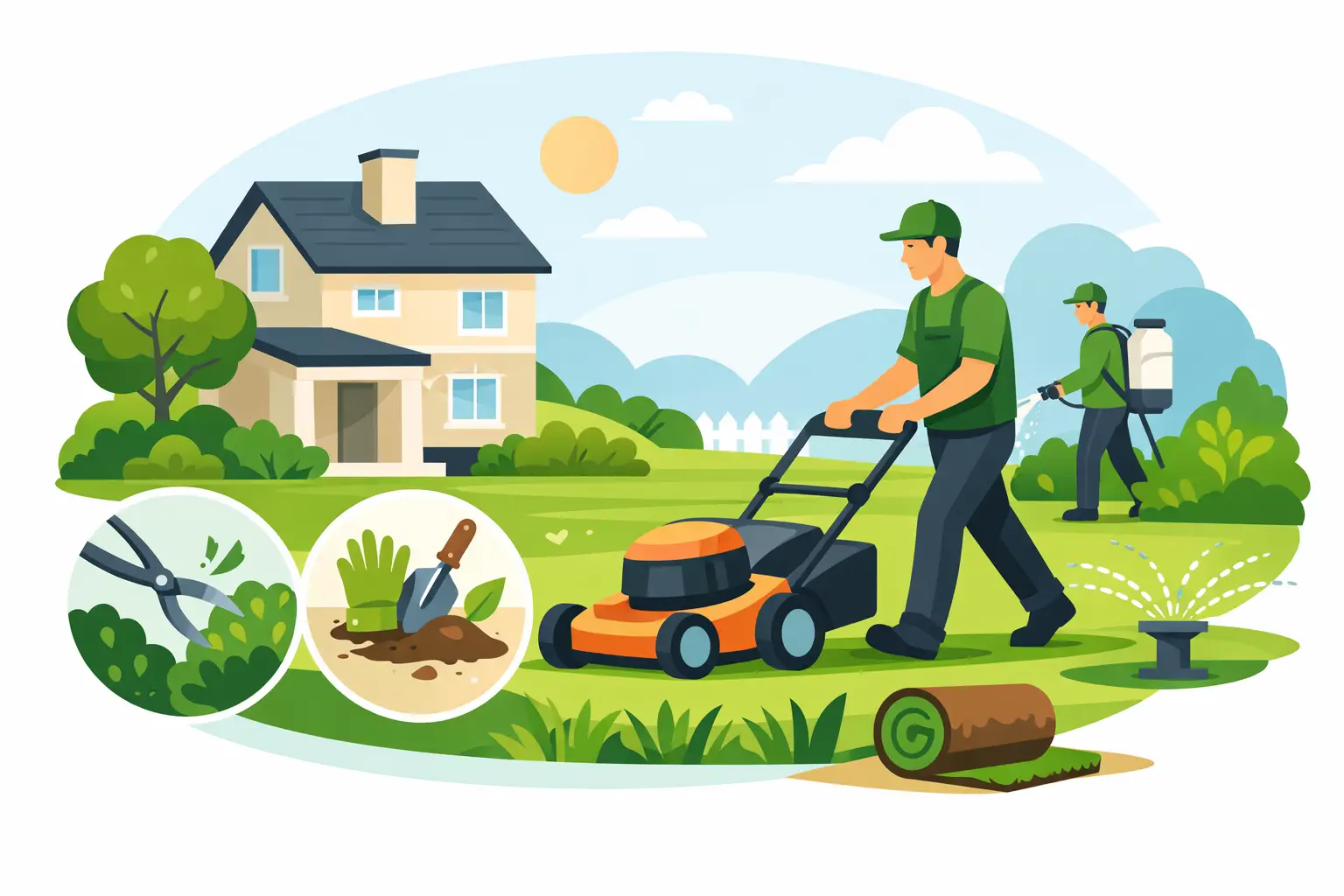
Most homeowners do not start by asking for "everything." They start with a yard that looks uneven, patchy, overgrown, or simply harder to keep up with than expected. A good residential lawn care services list helps you understand what work actually improves the look, health, and usability of your property so you can choose the right service instead of paying for work you do not need.
That matters because lawn care is rarely one single task. The best-looking properties usually benefit from a combination of turf improvement, seasonal cleanup, edging, weed control, and broader landscape attention. For homeowners and property managers, the real goal is not just shorter grass. It is a cleaner, healthier outdoor space that adds curb appeal, protects property value, and stays manageable throughout the year.
What a residential lawn care services list should include
When people hear lawn care, they often think only about mowing. In practice, professional lawn care covers a broader set of services tied to turf health, appearance, and routine property presentation. A strong residential lawn care services list should explain not just what is offered, but why each service matters.
Grass cutting is the most visible piece, but it is only one part of consistent lawn appearance. Edging and line trimming make a property look finished by defining borders along walkways, patios, driveways, and planting beds. Without those details, even freshly cut grass can still look unkempt.
Weed management is another core category. Some weeds are mostly cosmetic, while others spread aggressively and compete with turf for water and nutrients. The right approach depends on the lawn type, the season, and how severe the issue has become. Spot treatment may be enough in one yard, while another needs a more structured plan.
Fertilization supports thicker, healthier turf, but timing matters. Applying the wrong product at the wrong time can lead to weak growth or wasted money. That is one reason many homeowners prefer to work with a provider who understands seasonal lawn needs rather than treating every yard the same way.
Aeration is often overlooked until soil compaction starts affecting drainage and growth. If a lawn gets heavy foot traffic or the soil feels hard and dense, aeration can help improve air, water, and nutrient movement below the surface. It is not necessary for every property every year, but in the right conditions it can make a noticeable difference.
Overseeding is commonly paired with aeration or used to improve sparse areas. This is especially useful when a lawn has thin spots, minor damage, or an uneven appearance. It is not a quick fix for every problem, though. If poor drainage, soil issues, or excessive shade are causing the damage, seed alone will not solve it.
Common services homeowners request most often
Some lawn services are recurring, while others are more situational. The most common requests usually come from property owners who want better curb appeal without spending every weekend managing outdoor work themselves.
Routine mowing and trimming remain the starting point for many homes because consistency changes how a property feels from the street. Clean lines around driveways and walkways create a cared-for appearance, especially when paired with tidy planting beds and debris removal.
Seasonal cleanup is another frequent need. In spring, properties often need leaf removal, branch cleanup, bed refreshing, and general preparation after winter. In fall, leaves and organic buildup can smother turf and leave a yard looking neglected. Cleanup work may sound simple, but on larger lots or heavily landscaped properties, it takes time and attention to do it well.
Shrub and hedge trimming is sometimes grouped with lawn-focused care because it affects the same overall impression. A healthy lawn can still look unfinished if the surrounding plant material is overgrown. Basic pruning and shaping help maintain order and keep the full landscape looking intentional.
Many homeowners also need help with bare patches, worn areas, or lawns that never fully established. In those cases, sod installation may be the better option than trying to nurse weak grass back over time. Sod provides a faster visual result, which is valuable when curb appeal matters right away or when a property is preparing for sale.
Lawn care vs. broader outdoor property services
A residential lawn care services list is most useful when it shows where lawn work ends and where broader exterior improvement begins. That line matters because many properties need more than turf care to truly look complete.
For example, if your grass is healthy but your planting beds are empty, washed out, or poorly defined, the yard will still feel unfinished. Planting, bed redesign, mulch refresh, and border improvements may have as much impact on appearance as lawn work does. The same goes for hard surfaces. A well-kept lawn next to a cracked or outdated patio can only carry curb appeal so far.
That is where a full-service outdoor company offers practical value. Instead of hiring one provider for turf, another for planting, and another for hardscape improvements, homeowners can get coordinated recommendations that fit the property as a whole. Greenstone Landscaping Co works in that full-service space, helping clients improve both day-to-day appearance and long-term outdoor function.
Concrete patios, stamped concrete patios, and concrete driveways are not lawn care services, but they influence how your yard looks and performs. If your goal is a cleaner, more usable front or backyard, those upgrades often work best alongside landscape and turf improvements rather than as separate projects done months apart.
How to choose the right services for your property
The right service mix depends on the current condition of the yard, your budget, and how quickly you want results. A homeowner dealing with overgrowth and neglected edges may only need cleanup and presentation-focused work at first. Another property may need turf restoration, sod installation, and planting upgrades to really change the look.
It also depends on whether the issue is cosmetic or structural. Thin grass caused by temporary stress is different from thin grass caused by drainage problems, compacted soil, or heavy shade. If the underlying issue is not addressed, repeated treatments may not deliver much improvement.
That is why a one-size-fits-all lawn plan usually falls short. A smaller, newer yard may need basic recurring attention and occasional seasonal work. A larger property with mature landscaping, sloped areas, and mixed sun exposure may need a more tailored approach.
Homeowners should also think about expectations. If you want the lawn to simply look neat, the service list will be shorter. If you want the entire property to feel upgraded and easier to maintain, it often makes sense to pair lawn-focused work with bed care, planting, and hardscape improvements.
Questions to ask when reviewing a residential lawn care services list
Before hiring a provider, it helps to look past the service names and ask what is actually included. One company may list edging, cleanup, and trimming as part of routine visits, while another treats them as add-ons. That can change both price and results.
Ask how the company evaluates lawn condition before recommending services. This is especially useful if you are dealing with patchy turf, weeds, drainage concerns, or seasonal decline. Good recommendations should reflect the actual property, not a generic package.
It is also worth asking whether the provider handles related outdoor improvements. If you already know the lawn is only one part of the issue, working with a team that can also address planting, sod, patios, or driveway appearance can save time and reduce coordination headaches.
For homeowners in places like Loganville, Winder, and Athens, that matters even more because weather patterns, soil conditions, and seasonal timing can affect what services make sense and when they should be scheduled. Local experience helps avoid guesswork.
Building a service plan that makes sense
The best lawn care strategy is not always the longest one. It is the one that solves the actual problem, improves curb appeal, and fits how you use your property. Some homes need routine appearance work and seasonal cleanup. Others need a more complete reset that includes sod, planting, and upgraded outdoor surfaces.
A useful residential lawn care services list should give you clarity, not confusion. It should make it easier to see what supports turf health, what improves presentation, and what additional services may be worth considering if the goal is a more polished and functional exterior.
If your yard feels like a collection of separate problems, that is usually a sign to stop thinking in isolated tasks and start thinking in terms of the whole property. The right plan brings those pieces together so the outside of your home looks cared for, works better, and stays that way.