
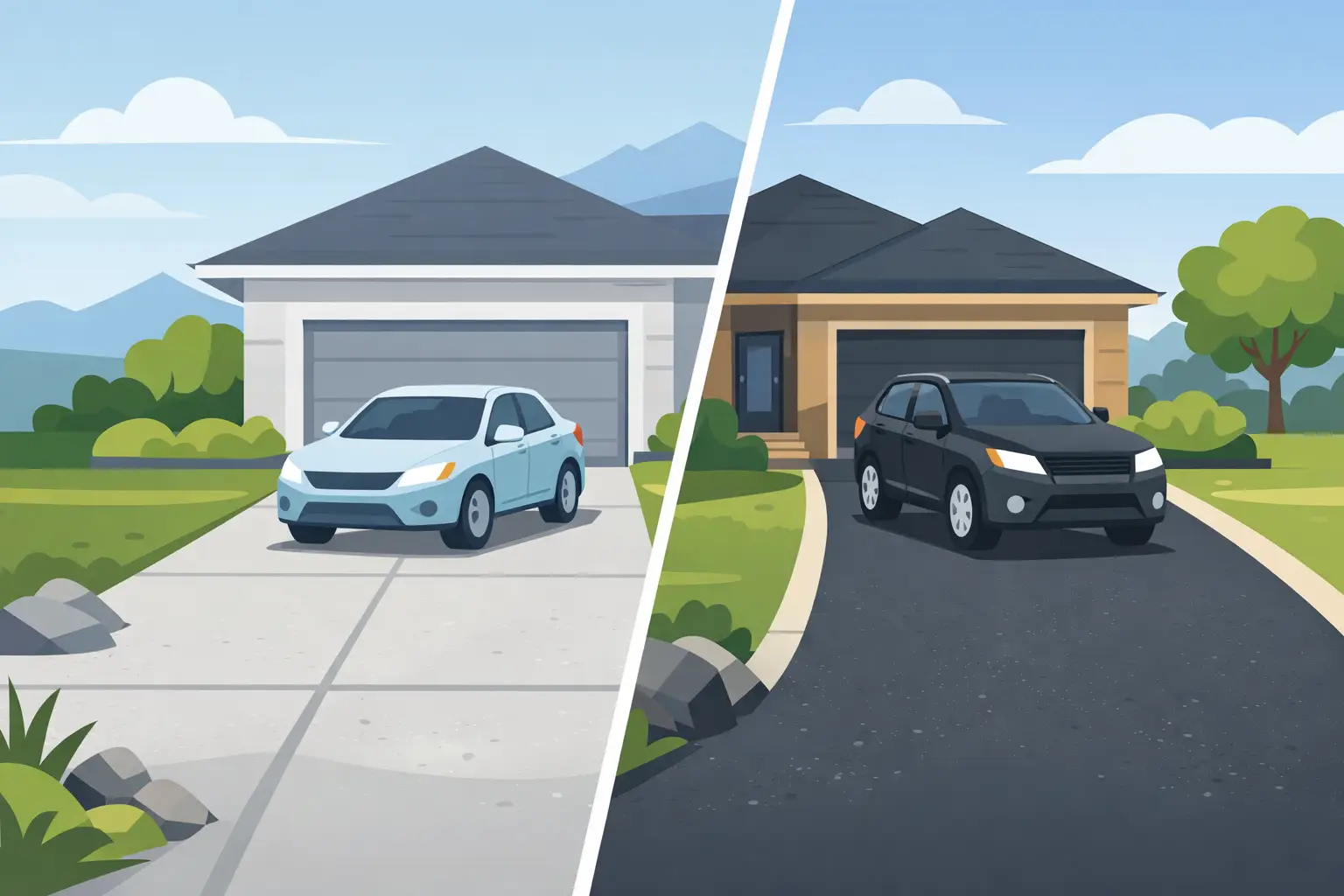
When a driveway starts cracking, staining, or holding water, the material choice stops feeling cosmetic. For many property owners, the real question is concrete driveway vs asphalt - which one gives you the best mix of appearance, durability, and long-term value without creating extra headaches later.
The answer depends on how you use the space, what kind of look you want, and how long you plan to stay in the property. Both materials can perform well when installed correctly. The difference is that they age differently, require different maintenance, and make a different impression from the street.
Concrete driveway vs asphalt: the biggest difference
If you want the short version, concrete usually wins on appearance, lifespan, and customization. Asphalt usually wins on lower upfront cost and faster installation. That sounds simple, but most projects are not decided by one factor.
A homeowner focused on curb appeal may see concrete as the better investment, especially if the driveway sits front and center. A property owner trying to control initial project cost may lean toward asphalt. The right choice often comes down to whether you want to spend less now or deal with less replacement pressure later.
Upfront cost vs long-term value
Asphalt is typically less expensive to install than concrete. That lower entry price is what attracts many buyers first. If the goal is to get a functional new driveway in place at the lowest upfront cost, asphalt has a clear advantage.
Concrete generally costs more at installation, but it often delivers better long-term value because it lasts longer and tends to hold its structure well when properly installed over a solid base. Over time, that longer service life can offset the higher starting price.
This is where many people make the wrong comparison. They look only at the quote, not the full ownership cycle. A lower-priced material is not automatically the cheaper option over 20 or 30 years. If you expect to stay in your home for the long haul, the math can shift in concrete's favor.
Appearance and curb appeal
For most residential properties, concrete offers a cleaner, more finished appearance. It works well with modern homes, traditional homes, and higher-end landscape designs because it looks intentional and polished. It also gives you more design flexibility.
Standard broom-finish concrete has a neat, bright look that pairs well with walkways, patios, and hardscape features. If you want something more distinctive, decorative options such as stamped concrete can create a custom appearance that asphalt simply cannot match. That matters when the driveway is part of the property's overall presentation, not just a place to park.
Asphalt has a simpler, more utilitarian look. Some owners like the dark, uniform finish, especially at first. But as it ages, fading and patching can become more noticeable. For a property where appearance plays a major role in value perception, concrete often feels like the stronger fit.
Lifespan and durability
Concrete typically lasts longer than asphalt. A well-installed concrete driveway can serve a property for decades, especially when drainage, thickness, reinforcement, and base preparation are handled properly. It stands up well to daily vehicle use and can maintain a solid surface for a long time.
Asphalt can still be durable, but it usually has a shorter overall lifespan. It is more likely to need resurfacing or replacement sooner than concrete. That does not make it a bad material. It just means the maintenance and replacement timeline is often more active.
Durability also depends on how the driveway is used. Heavy delivery traffic, work trucks, turning movements, and poor drainage can shorten the life of either material. A good installer will look beyond the surface and consider the base, grading, water flow, and expected load before recommending one option.
Maintenance needs over time
Neither driveway material is maintenance-free. The difference is what kind of maintenance you are signing up for.
Asphalt usually requires more routine attention. Sealing is a common part of ownership, and small cracks often need to be addressed before they spread. In many cases, owners accept this because the repairs can be straightforward and the initial cost was lower.
Concrete generally needs less frequent maintenance, but when damage does happen, repairs can be more visible. A crack or patch in concrete may stand out more than a repair in asphalt. Stains can also be more noticeable on lighter concrete surfaces, especially from oil or rust.
So the trade-off is not maintenance versus no maintenance. It is lower-cost, more frequent upkeep with asphalt versus less frequent but sometimes more noticeable repair issues with concrete.
Weather and climate performance
Climate should be part of the decision, but it should not be the only factor. Asphalt tends to handle freeze-thaw movement with a bit more flexibility, which can be useful in colder conditions. Concrete is more rigid, and if water gets underneath and the base is poor, movement can create cracking.
On the other hand, asphalt can soften in extreme heat and may be more prone to surface deformation under certain conditions. Concrete generally performs better under high temperatures and direct sun, which can matter in open driveways with long summer exposure.
In Georgia areas like Loganville, Winder, Athens, and Lawrenceville, heat, rain, and drainage often matter as much as winter conditions. That means installation quality is just as important as the material itself. A properly graded concrete driveway with the right base can perform extremely well in this region.
Installation timeline and convenience
If speed is the priority, asphalt often has the edge. It can usually be installed and put into service faster than concrete. For commercial settings or busy households that want minimal disruption, that can be appealing.
Concrete generally takes longer because it needs proper curing time before it is ready for full use. That longer timeline can be a drawback if immediate access matters. Still, many owners accept the wait because they are aiming for a longer-lasting, better-looking result.
This is one of those areas where expectations should be clear from the start. A good project is not only about what gets installed, but how the schedule fits your property and routine.
Resale impact and property impression
Driveways do more visual work than people realize. They frame the approach to the home or building, influence first impressions, and can either support or drag down the rest of the exterior.
Concrete often contributes more to perceived property value because it looks more finished and higher-end. That is especially true when it complements nearby features like patios, walkways, retaining walls, or entry paths. If you are already investing in exterior improvements, concrete usually integrates better into a cohesive design.
Asphalt can still be perfectly suitable for many properties, especially where function matters more than style. But if your goal is to create a polished, upgraded appearance, concrete usually carries more visual weight.
When concrete makes more sense
Concrete is often the better choice when you plan to stay in the property for years, want stronger curb appeal, or care about a surface that feels more permanent. It also makes sense when the driveway is part of a larger outdoor upgrade and you want the materials to look coordinated.
For homeowners considering decorative finishes, concrete is the clear winner. Stamped concrete, border details, and other custom treatments can turn a basic driveway into a feature rather than an afterthought. That is not just about style. It can improve how the whole front exterior reads from the street.
When asphalt makes more sense
Asphalt is often the better fit when lower upfront cost is the deciding factor or when you need a quicker installation timeline. It can also work well for longer driveways where budget matters and a simpler look is acceptable.
For some small commercial properties or practical residential applications, asphalt does the job without asking for the larger initial investment. If the owner understands the maintenance cycle and is comfortable with it, asphalt can be a reasonable and cost-effective solution.
The real decision comes down to priorities
The best driveway material is not the one that wins every category. It is the one that fits your property, budget, and expectations. If you want lower upfront cost and quicker installation, asphalt may be the better answer. If you want longer life, stronger curb appeal, and more design flexibility, concrete usually stands out.
At Greenstone Landscaping Co, we see this choice most clearly when clients think beyond the driveway itself and consider how it supports the full exterior of the property. A driveway should handle traffic, drain correctly, and look like it belongs with the home.
If you are deciding between the two, focus less on which material is universally better and more on which one matches how you want your property to look and perform five, ten, and twenty years from now.