

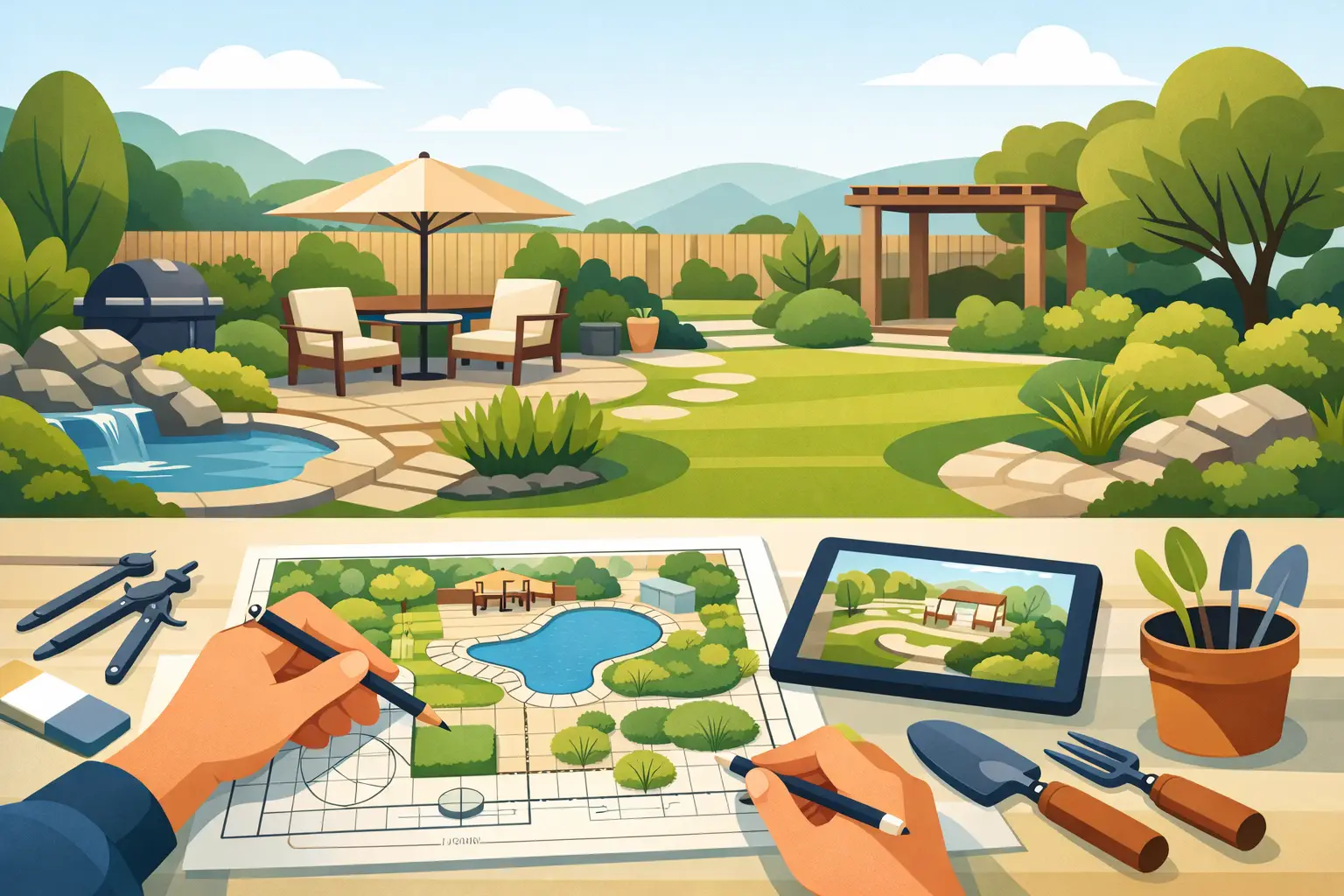
A backyard usually starts telling on itself fast. Maybe the grass stops where mud begins, the patio feels too small for how you actually live, or the planting beds look fine for two months and tired for the other ten. If you are figuring out how to plan backyard landscaping, the goal is not to add random features. It is to create a space that works, looks finished, and holds up over time.
The best backyard plans start with real use, not inspiration photos. A yard that looks great online can still fail on your property if the grading is wrong, the drainage is ignored, or the layout does not match how your household spends time outside. Good planning helps you avoid rework, wasted money, and features that never get used.
How to plan backyard landscaping with the site in mind
Before you think about plants, pavers, or decorative touches, take a hard look at the yard you already have. Size matters, but so do slope, sun exposure, runoff, and the condition of existing surfaces. A flat backyard gives you more flexibility. A sloped one may need grading, drainage solutions, or retaining elements before anything else makes sense.
Walk the space at different times of day. Notice where the sun hits in the morning and where shade settles in the afternoon. Watch where water stands after rain. Look at views from inside the house too, because your backyard should feel organized from the kitchen window or back door, not just from the far fence line.
Existing structures should be part of the plan, not an afterthought. That includes fencing, trees, sheds, HVAC units, utility areas, and any concrete that is staying. If the current patio is cracked, too narrow, or awkwardly placed, it may be smarter to replace it than to build around a weak starting point.
Start with function before style
A backyard needs a job description. For some properties, that means a larger patio for family gatherings and outdoor dining. For others, it means cleaner traffic flow, easier upkeep, and defined areas that make the yard feel more usable. Small commercial properties may need a polished look near entrances and a layout that stays clean and practical for visitors or tenants.
Think in zones. One zone may be for seating, one for grilling, one for open movement, and one for planting that softens the edges. This does not need to become a complicated master plan with every square foot assigned. It just means the yard should be arranged on purpose.
This is where many projects go off track. Homeowners often pick a fire pit, pergola, or decorative bed first, then try to force everything around it. That can leave you with cramped walkways, poor proportions, and too many materials competing for attention. It is better to decide how the space needs to function, then choose features that support that use.
Set a budget that matches the scope
Backyard landscaping can range from a targeted cleanup with fresh planting to a full redesign with hardscape installation, patio work, sod, edging, and drainage correction. The right budget depends on what the yard needs to perform well, not just what you hope to spend.
The biggest cost drivers are usually hardscape, grading, drainage work, and concrete. If you want a patio that lasts, the base preparation matters as much as the finish. That is especially true for concrete patios and stamped concrete patios, where appearance and durability depend on proper installation from the ground up. Cutting corners under the surface is what often leads to cracking, settling, and drainage issues later.
It helps to separate must-haves from nice-to-haves. A solid patio extension, clean planting layout, and proper drainage may bring more value than trying to squeeze in several decorative features at once. If the full vision exceeds the budget, phase the project in a way that preserves the long-term plan. Build the hardscape correctly first, then add planting or enhancements in later stages.
Build the layout around movement and scale
The simplest way to make a backyard feel more professional is to improve flow. People should be able to move from the house to the patio, from the patio to the yard, and around key areas without awkward turns or bottlenecks. If guests have to step through mulch beds or squeeze around furniture, the layout is working against you.
Patios should fit the way they will be used. A small pad may look fine on paper but feel crowded once you add chairs, a table, or a grill. Walkways should feel natural and connect the spaces people actually use. Curves can work well, but only when they support the layout. Too many decorative bends can make a yard feel busy instead of clean.
Scale matters just as much as movement. Large homes often need broader planting beds and more substantial hardscape to feel balanced. Smaller yards benefit from simpler lines and fewer material changes. Packing too much into a tight backyard usually makes it feel smaller, not better.
Choose materials that fit the property
Material selection should support the style of the home and the level of upkeep you want. Concrete is often a strong choice for patios and walkways because it creates a clean, durable surface that works with many home styles. Stamped concrete can add more visual character if you want the look of a higher-end finish without introducing multiple materials into the design.
The trade-off is that decorative finishes need thoughtful placement and quality workmanship. A stamped patio can look sharp and elevate the entire yard, but if the pattern clashes with the home or the color is too aggressive, it can take over the space. In many cases, simple and well-executed wins.
Planting materials should be chosen the same way. Pick plants that fit the available sun, mature to the right size, and support a neat overall appearance. The wrong plant in the wrong spot becomes a maintenance problem fast. Foundation-style structure in the backyard often works better than a scattered collection of impulse buys from the garden center.
Sod can be a smart part of the plan when you want a finished, usable surface quickly. It is especially effective after grading corrections or new hardscape installation, when the yard needs a clean reset. But sod only performs well if the underlying soil and drainage are addressed first.
Do not ignore drainage and grade
If you remember one part of how to plan backyard landscaping, make it this: water decides whether the project lasts. Standing water, washout, soggy turf, and runoff toward the house can ruin even the best-looking installation.
Drainage planning is not flashy, but it protects everything else. Patio elevations, slope away from the home, downspout management, and low spots all need attention before the finish work goes in. A backyard that feels muddy or unstable after every storm is telling you something important.
This is one area where professional input often pays for itself. Homeowners tend to focus on surface changes they can see. Contractors who work with landscape installation and concrete know the hidden issues that affect long-term performance. It is easier and cheaper to solve drainage before installing a new patio or fresh sod than after.
Keep the design cohesive
A good backyard does not need every popular feature. It needs consistency. When the materials, planting, shapes, and spacing all feel connected, the property looks more finished and more valuable.
That usually means limiting the palette. Stick with one or two hardscape materials, repeat plant groupings, and keep bed lines intentional. If your home has a straightforward exterior, the landscape should probably follow that lead. If the architecture is more detailed, you may have room for a little more texture or pattern, but restraint still matters.
The same goes for focal points. One strong feature, such as a new patio, defined seating area, or well-framed planting bed, will usually do more for the yard than several smaller accents competing for attention.
Know when to bring in a professional
Some backyard projects can start with a homeowner sketch and a clear goal. Others need experienced planning from the beginning. If the yard has drainage problems, elevation changes, failing concrete, or multiple uses that need to fit together, professional design and installation can save time and prevent expensive mistakes.
A full-service contractor is especially helpful when the project combines hardscape, planting, sod, and concrete work. Coordinating separate crews often leads to delays, finger-pointing, and uneven results. A single team with a practical plan can keep the project cleaner, more efficient, and better aligned from start to finish.
For property owners in places like Loganville, Winder, Athens, and Lawrenceville, that local experience also matters. Soil conditions, rainfall patterns, and typical property layouts shape what will perform well and what may need extra attention.
The right backyard plan is not the one with the most features. It is the one that solves the real problems of the space, fits the way you use your property, and still looks good after the project is finished. Start with function, build on solid groundwork, and let every choice earn its place. That is how a backyard stops feeling unfinished and starts working the way it should.