
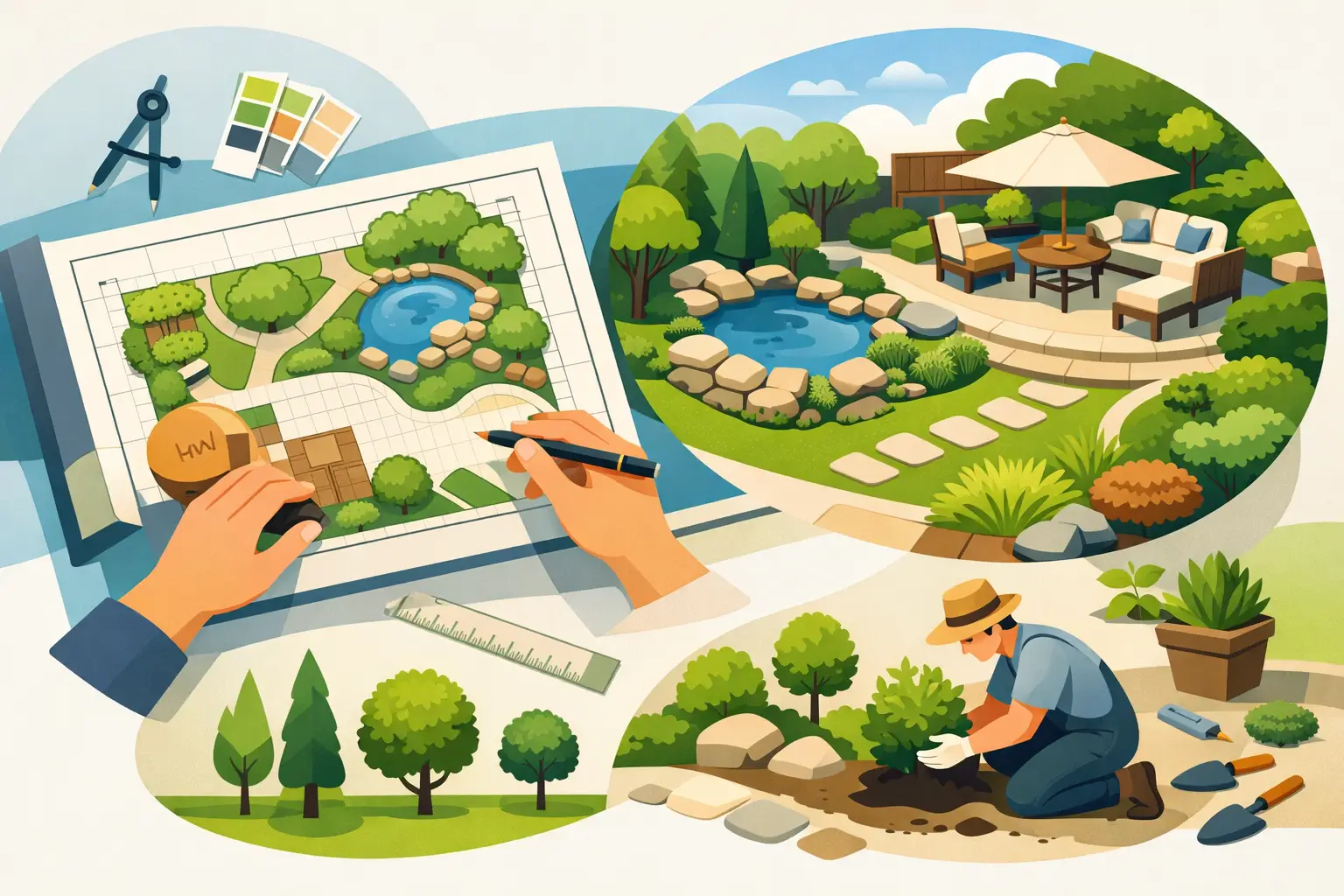
A good yard usually looks effortless from the street, but that result starts with a clear plan. If you are figuring out how to plan a landscape design, the goal is not to pick plants first or jump straight to a patio. The goal is to make the space work for the way you live, the way your property drains, and the amount of upkeep you actually want.
That is where many projects go off track. A homeowner wants better curb appeal, a cleaner backyard, or a more useful outdoor area for entertaining, then starts buying shrubs or sketching ideas without thinking through traffic flow, sun exposure, hardscape placement, and long-term maintenance. The result can look good for a season and become frustrating after that. A strong landscape plan prevents those mistakes.
Start with the purpose of the space
Before you think about colors, materials, or plant varieties, decide what the yard needs to do. A front yard usually has a different job than a backyard. One may need to improve curb appeal and frame the home, while the other may need room for seating, grilling, play, pets, or easier movement from the house to the driveway or pool.
This step matters because landscape design is not only visual. It is functional. A stamped concrete patio might be the right choice for one property because it creates a finished entertaining area with a durable surface. On another property, widening access from the driveway to the entry path may matter more. If the plan does not begin with use, it is easy to spend money on features that look nice but solve very little.
It also helps to be honest about how much time you want to put into care. Some owners like layered planting beds and seasonal color changes. Others want a polished look that stays clean with less hands-on attention. Neither approach is wrong, but the design should match the expectation.
How to plan a landscape design from the ground up
The best way to plan is to work from fixed conditions first and style choices second. Walk the property and note what cannot easily change. That includes the house footprint, driveway, existing concrete, fences, utilities, drainage patterns, slopes, and any areas that stay wet or dry out quickly.
Sun and shade are just as important. A planting bed that gets intense afternoon sun will have different needs than an area shaded by the house most of the day. The same goes for traffic patterns. Notice where people already walk. If guests always cut across the lawn from the driveway to the porch, the property may be asking for a better walkway rather than more planting.
Once those realities are clear, the layout starts to make sense. Think in zones. You may have an entry zone, a foundation planting zone, a backyard gathering area, and side-yard utility space. Breaking the property into zones keeps the plan practical and helps you avoid treating the whole yard like one big blank canvas.
Build the layout before choosing details
One of the smartest moves in landscape planning is deciding where hardscape goes before you focus on plants. Patios, walkways, driveways, edging, retaining features, and transition areas create the structure of the yard. Plants soften the design and add character, but the hardscape often determines how the space functions every day.
For example, a concrete patio creates a reliable surface for furniture, foot traffic, and outdoor living. A stamped concrete patio may add more decorative appeal while still giving you durability. A concrete driveway can improve first impressions and make the front of the property feel more finished. These are not just construction choices. They are design decisions that affect flow, appearance, and maintenance over time.
There are trade-offs here. More hardscape usually means cleaner lines and lower plant upkeep, but too much can make a property feel harsh or hot in summer. More planting can create a softer, fuller look, but it may require more pruning, cleanup, and seasonal attention. The right balance depends on your goals, your lot size, and how you want the property to feel.
Let the architecture guide the design
A landscape should look connected to the house, not separate from it. That does not mean everything has to match perfectly, but the scale, lines, and materials should feel consistent. A simple ranch home often benefits from clean bed lines, restrained planting, and practical hardscape. A larger home with more architectural detail may support layered planting, wider front walkways, or a more defined patio layout.
Pay attention to proportions. Small shrubs lined up against a two-story facade may disappear visually. An oversized patio in a compact yard may leave no breathing room. Good planning accounts for how features will look not just on installation day, but once plants mature and outdoor furniture is in place.
This is also where material selection matters. Concrete can be finished in ways that feel clean and modern or textured and more decorative, depending on the property. Planting choices should support that overall style rather than compete with it.
Choose plants for performance, not just appearance
Plant selection is where many landscape plans become too optimistic. Something blooms beautifully at the garden center, so it gets added without enough thought about size, water needs, sun exposure, or how it will look in the off-season. A better approach is to choose plants based on performance first, then visual appeal.
Start with the role each plant plays. Some anchor the corners of the house. Some define bed depth. Some fill space at mid-height. Others provide seasonal color or soften the edge of a patio. When every plant has a job, the design feels more intentional.
It is also worth thinking about growth habits. A neat-looking shrub can become oversized and crowded in a few years if spacing is too tight. Trees planted too close to driveways, patios, or foundations can create future problems. This is one reason a professional plan often saves money over time. It reduces the chance of rework.
If you want a cleaner, lower-fuss result, fewer varieties often work better than too many. Repetition gives the yard a more organized appearance and usually makes future care simpler.
Set a budget that reflects priorities
A landscape plan should match the budget, but that does not mean every project has to happen at once. In many cases, the smartest path is to prioritize the elements that shape the property most. That may be the front entry, the driveway edge, the patio area, or the foundation planting around the house.
This is where phasing can help. A full design can be created upfront, then installed in stages based on budget and timing. That approach works well for property owners who want a complete long-term vision without rushing every decision. It also keeps the project cohesive, since each phase is based on the same layout rather than added piece by piece with no overall direction.
Try not to spend the entire budget on decorative features while ignoring practical needs like grading, access, or drainage corrections. Those behind-the-scenes items may not be the most exciting part of the project, but they protect the investment.
Think beyond installation day
A landscape design should still make sense six months and six years from now. That means planning for plant growth, surface wear, weather exposure, and how the property will be used over time. A young family may need open space now and more entertaining area later. A small business may need a cleaner, more durable front approach that holds up well under regular foot traffic.
This long-view mindset is one reason professional planning brings value. It is not only about making a property attractive. It is about reducing avoidable issues and creating a layout that continues to function. Greenstone Landscaping Co approaches projects with that practical mindset, because a design that looks great but causes ongoing problems is not really a successful design.
When to bring in a professional
Some property owners can sketch a basic plan and make solid choices on their own. But when the project includes multiple elements like patios, driveways, grading considerations, planting zones, and curb appeal upgrades, expert guidance usually makes the process smoother.
A professional can spot spacing problems, material conflicts, drainage issues, and layout inefficiencies before installation starts. That can save time, reduce change orders, and lead to a cleaner result. It also gives you a realistic view of what belongs in phase one and what can wait.
If your property feels disjointed, underused, or harder to improve than it should be, that is usually a sign the design needs structure, not just new plants. The best outdoor spaces are not accidents. They are planned with purpose, built with the property in mind, and designed to hold up in real life.
When you start with that mindset, the decisions get easier. You stop asking what should go in the yard and start asking what the yard should do for you.