
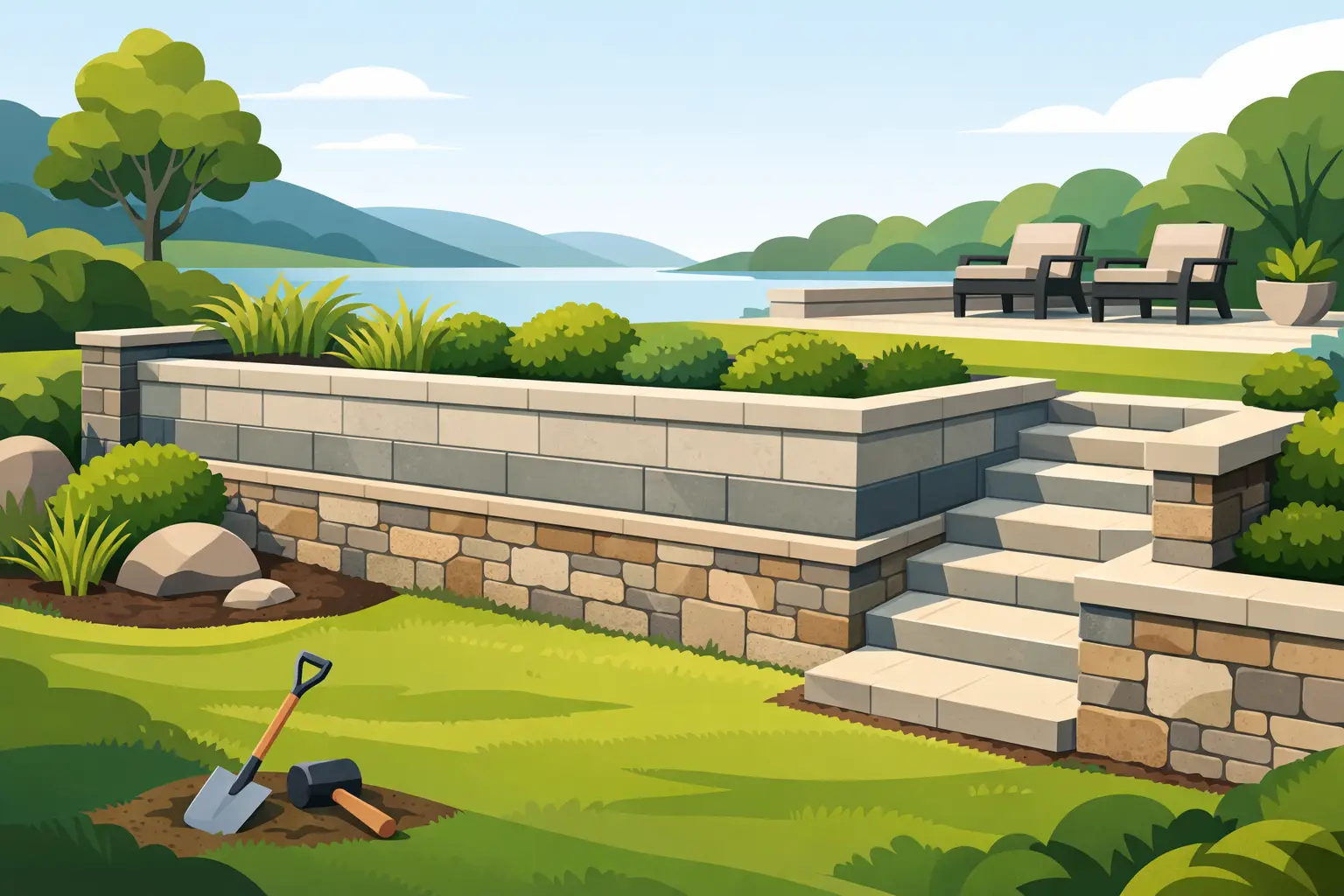
A sloped yard can turn a nice outdoor space into a constant headache. Soil washes out after heavy rain, planting beds shift, and parts of the property become hard to use. Retaining walls solve those problems when they are planned and built with the right purpose in mind. They do more than hold back soil. They shape the yard, improve drainage, create usable space, and give the landscape a more finished look.
For homeowners and property managers, that combination matters. A retaining wall is one of those upgrades that can be highly practical while still improving curb appeal. When it is done well, it looks like it belongs with the home, the grading, and the rest of the hardscape. When it is done poorly, it becomes a crack, lean, or drainage problem waiting to happen.
What retaining walls actually do
At the most basic level, retaining walls are built to resist the pressure of soil sitting behind them. That sounds simple, but the real job is broader than that. A well-built wall helps control erosion, supports grade changes, and creates flat areas for patios, walkways, planting beds, or open lawn space.
That is why retaining walls are often part of a larger outdoor plan rather than a stand-alone feature. If a property already needs grading work, drainage improvements, planting, or a new patio, a wall can tie those elements together. Instead of fighting the slope, the design starts using it.
The best results come from understanding the actual problem first. Sometimes the issue is steep grade. Sometimes it is runoff. Sometimes a customer wants more usable backyard space or a cleaner transition between driveway, patio, and landscape areas. The wall should be designed around that goal, not just added because the yard looks uneven.
Where retaining walls make the biggest difference
Retaining walls are especially useful on properties where elevation changes make the yard harder to manage or enjoy. A front yard with a slope near the driveway can look unfinished and become difficult to stabilize. A backyard with a drop-off may waste square footage that could otherwise support a seating area, planting bed, or play space.
In some cases, the value is mostly structural. The wall holds grade in place and reduces the ongoing wear caused by moving water and shifting soil. In other cases, the visual benefit is just as important. A layered landscape with clean lines tends to look more organized and intentional than an open slope with patchy grass and exposed dirt.
Small commercial properties can benefit too. When entrances, signage areas, or side yards need a cleaner appearance, retaining walls can help define the space and improve how the property presents from the street.
Choosing the right material for retaining walls
Material selection affects appearance, lifespan, and cost. There is no one right answer for every property. The best choice depends on wall height, soil conditions, drainage demands, and the style of the surrounding space.
Segmental concrete blocks are a common option because they offer a clean look, good durability, and design flexibility. They work well in many residential settings and can complement patios, walkways, and other hardscape features. Natural stone has a more organic appearance and can be a strong fit when the landscape leans traditional or higher-end. Poured concrete can create a more modern, solid appearance, though it may require a different visual approach to keep it from feeling too plain or industrial.
Timber walls are sometimes considered because of lower initial cost, but they usually involve trade-offs. Wood can work in the right setting, yet it generally does not offer the same long-term durability as concrete or stone, especially in areas with moisture exposure. If the goal is a long-lasting solution with lower risk of early replacement, more durable materials are usually the better investment.
The surrounding features matter too. If a property already has a concrete driveway, stamped concrete patio, or other structured hardscape elements, the retaining wall should feel connected to those finishes. A wall that clashes with the rest of the exterior can make the project feel pieced together rather than professionally planned.
Why drainage matters more than most people expect
Most retaining wall failures are not really about the face material. They are about pressure building behind the wall. Water adds weight, weakens soil stability, and creates the kind of force that can push a wall outward over time.
That is why drainage is not an extra. It is part of the wall. Proper base preparation, gravel backfill, and a system for moving water away from the structure all play a major role in long-term performance. Without that support, even an attractive wall can start showing signs of stress far sooner than expected.
This is also where it pays to think beyond the wall itself. If downspouts, grading, or nearby paved surfaces are sending water toward the area, the design should address those conditions. A retaining wall built without considering runoff from the rest of the property may solve one problem while creating another.
Height, engineering, and when details really matter
Not every retaining wall is a major structural job, but wall height changes the level of planning required. Lower decorative or light-duty walls may have simpler construction needs. Taller walls, load-bearing walls, or walls near driveways, patios, or structures often need more technical review.
That is where experience matters. Soil type, surcharge loads, drainage conditions, and local code requirements can all affect how the wall should be built. Homeowners do not need to become engineers, but they do need to know that retaining walls are not just stacked materials. The parts you do not see, like the footing, compaction, and backfill, often determine whether the project lasts.
In places like Loganville, Winder, and Athens, where heavy rains can quickly expose grading and drainage issues, those hidden construction details are especially important. A wall has to handle real site conditions, not just look good on installation day.
Retaining walls as part of a better outdoor layout
One of the biggest advantages of retaining walls is how they improve the function of a property. A difficult slope can be turned into a series of purposeful levels. That may mean room for a patio, a defined planting area, better access through the yard, or cleaner transitions around the home.
This is often where customers see the most value. The wall is not only protecting the landscape. It is helping create space that is easier to use and easier to enjoy. For example, pairing a retaining wall with a concrete patio can transform a backyard that once felt cramped or uneven into an outdoor area with structure and room to gather.
That same thinking applies to the front of a property. A retaining wall near an entry, driveway edge, or sloped bed can sharpen the overall appearance and make the landscape feel finished. It gives definition to the property instead of letting the grade dictate everything.
What to look for in a professional installation
A good retaining wall project starts with a clear plan. The contractor should understand the site, explain the purpose of the wall, and recommend materials and construction methods that fit the conditions. That includes thinking through drainage, neighboring surfaces, access, and how the wall will look once the full area is complete.
It is also worth paying attention to alignment and finish quality. A retaining wall should have consistent lines, smooth transitions, and a layout that suits the surrounding space. On curved walls or tiered designs, those details are even more noticeable.
Most property owners are not looking for a wall in isolation. They want the whole outdoor area to feel more usable, more polished, and easier to live with. That is why working with a company that understands hardscaping as part of the larger property can make the process simpler. Greenstone Landscaping Co approaches projects with that broader view, so the wall supports both the appearance and function of the space.
Cost versus long-term value
Retaining wall pricing varies based on height, length, material, site access, drainage needs, and whether the project is part of a larger outdoor upgrade. The lowest quote is not always the best value if it cuts corners on base prep or water management.
A wall that lasts, looks right, and reduces future erosion issues usually pays off better than one that needs early repair. It can also protect nearby improvements, including planting areas, patios, and paved surfaces. That broader value is worth considering when comparing options.
If you are thinking about retaining walls, the best place to start is with the problem you want solved. Maybe it is erosion. Maybe it is a steep yard that wastes space. Maybe it is a property that needs more structure and a cleaner finish. The right wall should make the entire outdoor area work better, not just hold the ground in place.