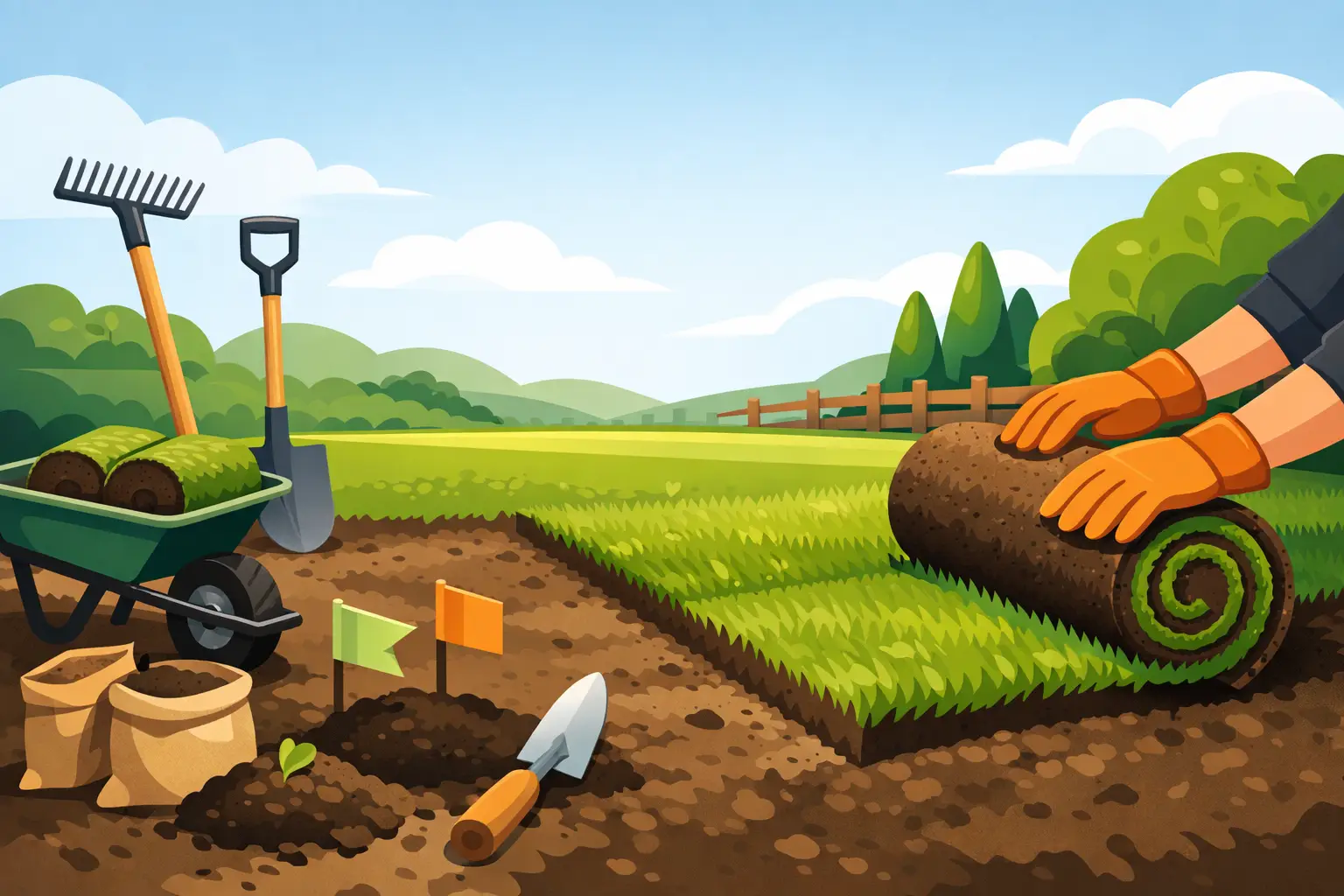
A new sod lawn can look finished in a day, but the result depends on what happens before the rolls ever arrive. If you are figuring out how to prepare for sod installation, the prep work is what decides whether your new lawn roots quickly or struggles from the start.
Fresh sod is a fast way to improve curb appeal, control bare spots, and give a property a clean, usable lawn without waiting through a full seeding cycle. Still, sod is not a shortcut around site preparation. Uneven grading, compacted soil, leftover debris, and poor irrigation planning can turn a good installation into a frustrating one.
Why proper prep matters before sod goes down
Sod needs direct contact with healthy, loosened soil so the roots can knit into the ground underneath. If the surface is hard, rocky, or poorly graded, the sod may dry out, lift at the seams, or root unevenly. That often leads to thin areas, standing water, and extra replacement costs.
Good preparation also helps the lawn look better long term. A yard that is smoothed correctly and built on improved soil is easier to mow, drains more evenly, and holds up better under regular use. For homeowners and small commercial properties, that means fewer problems after installation and a cleaner finished appearance from day one.
How to prepare for sod installation step by step
The first step is clearing the area completely. Old grass, weeds, rocks, roots, and construction debris all need to be removed before any grading or soil work begins. Laying sod over an existing lawn is rarely a good idea because the old material blocks root contact and creates an uneven base.
If the site has stubborn weeds, treatment may be needed before installation. Timing matters here. Some weed control products require a waiting period before new sod can be installed safely, so this is one of those details that should be planned, not rushed.
Once the surface is cleared, the ground should be graded. This does two things at once: it creates a level, attractive lawn area and it helps direct water away from the home, patio, driveway, or other hardscape features. The grade does not need to be perfectly flat. In fact, a slight slope is often better for drainage. What matters is consistency and the elimination of low spots where water can collect.
After grading, the soil should be loosened. Many yards have compacted subsoil from foot traffic, construction, or previous use. Compacted ground makes it harder for roots to establish, even if the sod itself looks healthy on installation day. Loosening the top few inches gives the new lawn a better environment to root into.
At this stage, soil amendments may make sense. It depends on the existing soil. Some properties need compost or topsoil blended in to improve structure and support root growth. Others may need pH correction based on a soil test. Not every yard needs extensive amendment, but almost every sod project benefits from evaluating the condition of the soil before installation rather than guessing.
Soil preparation for sod installation
If there is one part of the project that should not be skipped, it is soil prep. Good sod can only perform as well as the base underneath it. On many residential lots, the topsoil layer is thin or disturbed, especially around newer construction. In those cases, adding quality soil can make the difference between a lawn that establishes evenly and one that struggles in patches.
The finished soil surface should be firm enough to walk on without sinking, but loose enough to allow root penetration. That balance matters. Soil that is too fluffy can settle after installation and leave bumps or drainage issues. Soil that is packed too tightly can slow rooting and reduce water infiltration.
This is also the time to check final elevations around sidewalks, driveways, patios, and landscape beds. Sod has thickness, and the final grade should account for that. If the soil is left too high, the sod can sit above adjacent hard surfaces and create an awkward edge. If it is too low, the finished lawn can look sunken.
Irrigation should be planned before installation day
One of the most common mistakes in sod projects is treating watering as an afterthought. New sod needs immediate and consistent moisture after it is installed. If the irrigation plan is unclear, the lawn may dry out before the roots ever establish.
For some properties, that means checking sprinkler coverage ahead of time and adjusting heads where needed. For others, it means creating a manual watering plan that is realistic for the size of the area. Large lawns, hot weather, and sunny exposures all increase the need for consistent watering during the first few weeks.
Coverage matters more than good intentions. A yard can have a working sprinkler system and still end up with dry edges, missed strips, or oversaturated corners. Testing the system before installation gives you a chance to fix weak spots before the sod is on the ground.
Timing affects results
Sod can be installed during much of the year in many parts of the US, but conditions matter. Heat, drought, heavy rain, and cold snaps all affect establishment. The best timing usually comes down to local climate, grass type, and the property's ability to keep the new lawn watered properly.
This is where professional guidance helps. A rushed install before a stretch of extreme weather can lead to unnecessary stress on the new turf. Waiting a short time for better conditions can produce a much better outcome. For property owners in areas like Loganville, Winder, Athens, and Lawrenceville, local weather patterns and soil conditions can shift quickly, so scheduling should be based on actual site conditions rather than the calendar alone.
What to do the day before sod arrives
By the day before installation, the site should be fully cleared, graded, and ready to receive sod. This is not the time for major corrections. The area should be lightly moistened if conditions are dry, but not muddy. The access path for crews and materials should also be clear so the installation can move efficiently.
If pets, vehicles, or regular foot traffic use the area, a plan should be in place to keep the surface protected after the sod is laid. New sod looks durable right away, but it is vulnerable during the rooting phase. Limiting traffic early helps prevent shifting, rutting, and seam separation.
Common prep mistakes that cause lawn problems later
A lot of sod issues trace back to prep shortcuts. Leaving behind old grass is a big one. So is skipping proper grading because the yard looks mostly level from a distance. Surface appearance can be misleading, especially when small dips and compaction problems only show up after watering.
Another common issue is underestimating soil quality. If the existing ground is mostly clay, heavily compacted, or stripped of usable topsoil, the new lawn may not establish evenly without improvement. There is no single formula for every yard, which is why a site-specific approach usually delivers better results.
Then there is the watering problem. Even perfectly installed sod can fail if it does not receive the right moisture in the days that follow. Preparation is not just about dirt work. It includes making sure the lawn can be supported immediately after installation.
When professional sod prep is worth it
Some property owners can handle small prep work themselves, especially in simple, open areas. But larger lawns, drainage concerns, elevation changes, and poor soil conditions usually call for professional equipment and planning. That is especially true when sod is part of a broader exterior improvement project that includes planting, grading, or nearby hardscape features like concrete walkways, driveways, or patios.
A professional crew can identify problems before they are covered up by new turf. That includes drainage issues, low-grade areas near the foundation, and transitions where the lawn meets concrete surfaces. Fixing those details before installation is far easier than tearing up a new lawn later.
For many homeowners and property managers, the real benefit is not just labor savings. It is knowing the lawn was built on a solid foundation with the grading, soil prep, and installation handled correctly from the start.
A new sod lawn should feel like an upgrade, not a project that needs repairs a month later. When the ground is prepared the right way, the grass has a fair chance to root, fill in, and give the property the finished look people expect. If you are planning sod soon, the smartest move is to take the prep as seriously as the installation itself.